
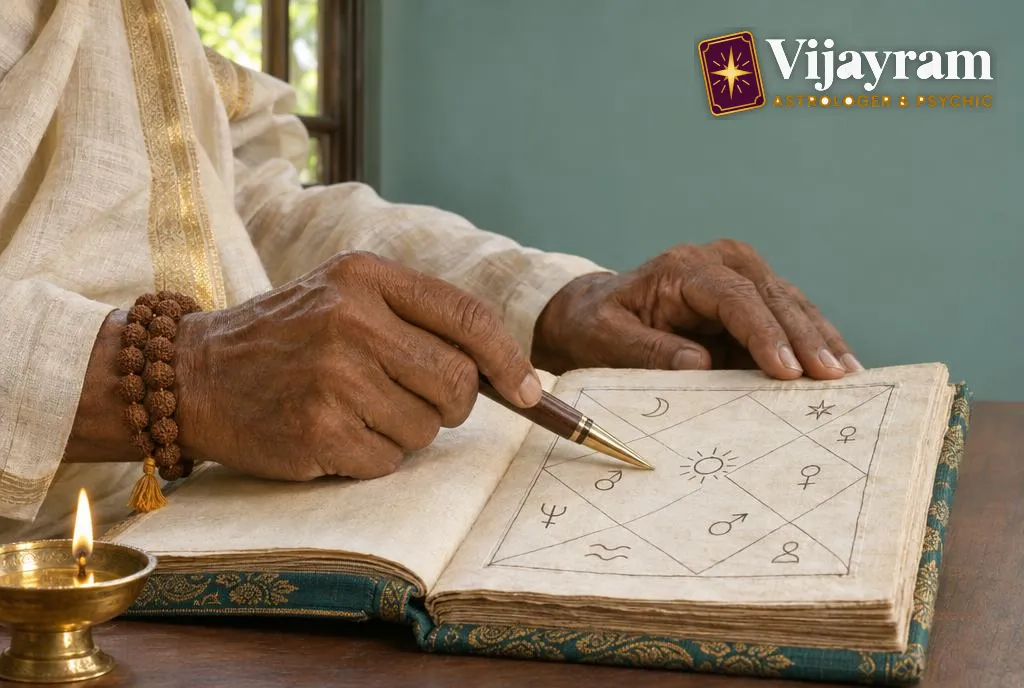
The match came first; the families come second
For generations, kundli matching happened before a couple had even met. A proposal came through relatives, the charts were compared, and only then did the two people sit in the same room. For a growing number of young people in Brampton, the order is reversed. They met on an app, a matrimonial site or through a friend's Instagram, they have been talking for months, and now they want to tell their parents.
That is often the moment someone says, "But have the kundlis been matched?" This post is for couples standing at that point, and for the parents who want to do things properly without spoiling something good.
Why couples who chose each other still ask
People give different reasons, and all of them are reasonable:
- One or both families will not bless the marriage without a match.
- The couple wants to know which years of marriage may need extra patience.
- Someone has heard the words "mangal dosha" and is frightened.
- They simply want to honour the tradition their grandparents kept.
Master Vijay Ram treats all four the same way. A match describes the fit between two charts. It does not override two adults who know each other well, and it never decides for them.
Step one: get honest birth details
A match is only as good as the details behind it. Each person needs the date of birth, the time as precisely as possible and the town of birth. Online couples sometimes find that one partner's birthday on social media is not the real date, or that nobody in the family wrote down the time. Ask early and kindly. If the time is uncertain, say so; he can work with an approximate time and will tell you which parts of the match are affected.
A partner who refuses to share any birth details at all is giving you information too. It may be shyness or family privacy. It is worth a gentle conversation.
Step two: what the 36 points actually measure
The common North Indian method, Ashtakoota or guna milan, scores eight factors for a total of 36 points:
- Varna (1 point): spiritual outlook and ego.
- Vashya (2): mutual attraction and influence.
- Tara (3): the wellbeing each brings the other.
- Yoni (4): physical and instinctive compatibility.
- Graha Maitri (5): friendship between the Moon-sign lords, often read as mental rapport.
- Gana (6): temperament.
- Bhakoot (7): family life, money and emotional rhythm.
- Nadi (8): traditionally linked with health and children.
Eighteen points is the figure people usually quote as a minimum. Treat it as a starting point, not a verdict. A 27 with a serious unresolved issue can be weaker than a 19 where the low scores sit in areas the couple already handles well. South Indian families may use a different system of poruthams; he can work with either.
Step three: read the whole chart, not just the score
Beyond the points, he looks at the seventh house of each chart, the condition of Venus and Mars, mangal dosha in both charts and the planetary periods the two of you will pass through in the first years of marriage. If mangal dosha is present, he explains how strong it really is. The post on mangal dosha worries before a wedding goes into detail.
Online couples often get one extra benefit. Because they already know each other, the reading can be checked against real life. "Your charts suggest you argue about money" lands differently when both people laugh and nod.
When the couple and the parents read the result differently
It happens often. The couple hears "a few areas need care" and feels relieved; a parent hears the same words and wants to stop everything. Master Vijay Ram tries to make the reading clear enough that nobody can twist it. He will say which concerns are serious, which are minor and which have simple remedies, such as a prayer or a well-chosen wedding date, that the families may choose to do. He will not invent a problem to delay a wedding, and he will not hide a real one to please the couple. After that, the decision belongs to the two adults getting married, ideally with their families beside them.
A word on safety for anyone who met online
No chart can confirm that a person is who they say they are. Before families meet or money changes hands, do the ordinary checks: video calls, meeting in public, introducing friends, and never sending money to someone you have not met. If something feels like a scam, the Canadian Anti-Fraud Centre and the police are the right places to turn. If you ever feel unsafe, call 911.
Online jealousy and suspicion can strain a new couple as well; social media jealousy and young Brampton couples covers that.
How the matching is done
Both sets of birth details are sent on WhatsApp. The reading happens by phone, WhatsApp or video, and the couple, the parents or everyone together can join. If one family is overseas, they can listen in from there. A match costs from $40 CAD, and you will know the exact figure before agreeing to anything. For other chart questions, see astrology and kundli matching in Brampton; for a reading about the relationship itself rather than the charts, see psychic readings. Everything else offered to Brampton families sits on the city page.